


Roth Conversions: Meet Mike & Sarah
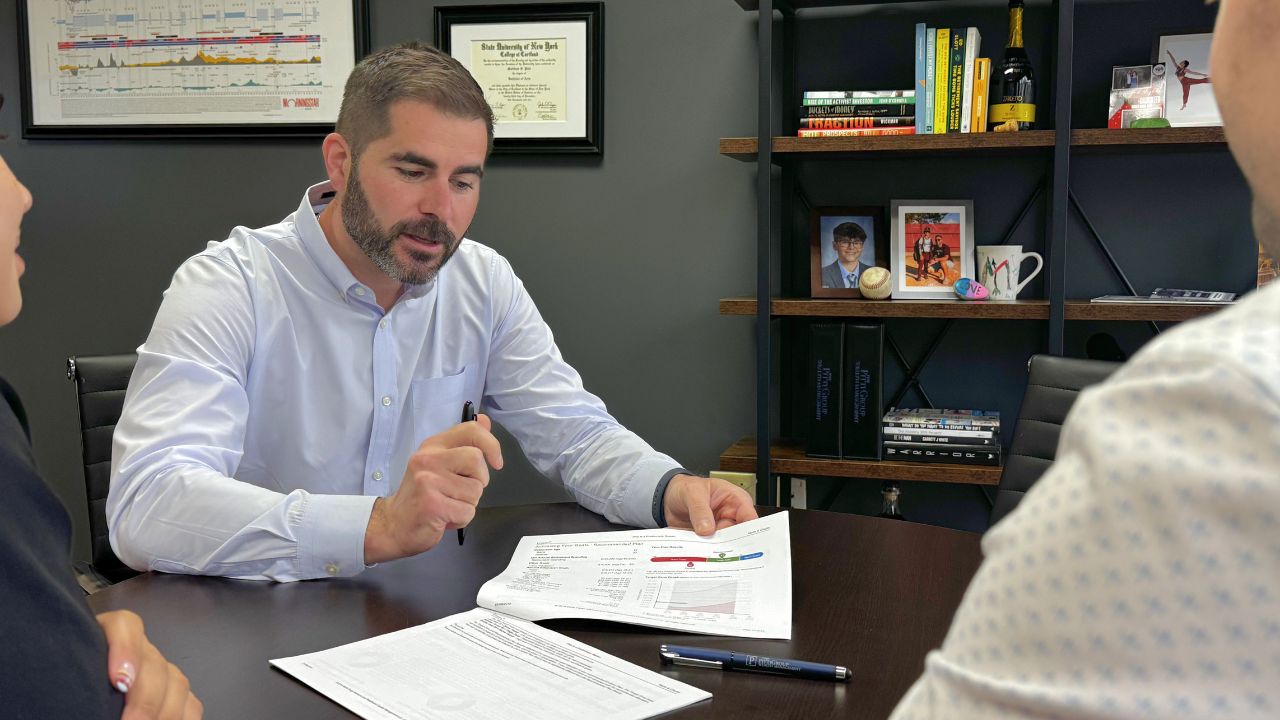
Meet Mike & Sarah
A dentist and a marketing director in their mid-40s, making great money and wondering if they were making the most of it.
Mike is a dentist earning $250,000 a year. Sarah is a marketing director bringing in $120,000. Together they have a household income of $370,000, two careers they've worked hard to build, and a genuine desire to make sure that income is going to work in the smartest way possible.
They own a home. They're saving in their retirement accounts. They keep a healthy cushion in the bank. By every visible measure, they're doing well.
But when they came to us, they had a question they couldn't quite shake: are we actually doing this right, or are we just guessing?
The Challenge
Mike and Sarah weren't in financial trouble. They weren't making big mistakes. But they had a nagging sense that their income was capable of doing more than it was.
They were saving, but not in a coordinated way. They were investing, but without a framework. And every tax season, they were writing a large check to the IRS with no clear sense of whether they had done everything they could to reduce it.
The questions they kept coming back to:
Are we saving in the right accounts, or just saving?
Are there vehicles we're missing that could lower our taxes?
What should we do with the money left over after we max out our 401(k)s?
Are we on track to retire at 60 or 62 with the income we want?
Is there a smarter order to all of this?
That last question turned out to be exactly the right one.
The Approach
We started with a Strategy Meeting. Before any recommendations, we wanted to understand Mike and Sarah as people: what they were trying to build, what was keeping them up at night, and what a great outcome actually looked like for them.
From there, we did a full review of their financial picture, looking at every account, every tax exposure, and every dollar not being deployed efficiently. What we found was a pattern we see often with high earners: strong income, good intentions, but no coordinated plan tying everything together.
The solution was to build their savings strategy around a clear, deliberate order of operations designed specifically for people in their tax bracket.
For high-income earners, sequence matters as much as amount.
At a 32% federal tax rate, every dollar you defer today is a dollar you pay taxes on later, ideally at a lower rate. That means filling pre-tax accounts first, then tax-free accounts, then taxable. Here is the framework we built their plan around:
Maximize both 401(k) plans
Max the 457(b) plan, a full second retirement account most people overlook
Max the Health Savings Account, the only triple tax-advantaged account in the tax code
Mega backdoor Roth via the 401(k), if the plan allows it
Backdoor Roth IRAs for both Mike and Sarah
Taxable brokerage account for any remaining surplus
We worked through each of these with Mike and Sarah, identifying what they were already doing, what they were missing, and what needed to change. In their case, the 457(b) was available to Mike through his practice and had never been used. The HSA was open but not being maximized or invested. The backdoor Roth had never been set up for either of them. And excess income was sitting idle in a checking account earning nothing.
We addressed each gap, built a systematic contribution plan, and put a structure in place they could follow every year.
The Results
With a coordinated plan in place, Mike and Sarah have clarity they didn't have before. They know exactly where every dollar is going, why it's going there, and what it's building toward. The guesswork is gone.
More specifically:
They are now maximizing every tax-advantaged vehicle available to them, including the 457(b) Mike had never used
Their HSA is fully funded and invested for long-term growth, not spent down each year
Backdoor Roth IRAs are in place for both of them and completed annually
Surplus income is now invested in their brokerage account with a clear strategy
Their tax bill reflects the planning, not just the income
They have a realistic, credible path to retiring at 60-62 with the after-tax income they want
They still have a lot of working years ahead of them. But for the first time, they feel like those years are building toward something specific.
Does this sound like your situation? Let's find out if there's a smarter order to what you're already doing.
Contact Us for a Meeting Today!
Disclosures
This case study is provided for illustrative purposes only to provide an example of the firm's process and methodology. The results portrayed are not representative of all client situations or experiences. An individual's experience may vary based on his or her individual circumstances and there can be no assurance that the firm will be able to achieve similar results in comparable situations. No portion of this case study is to be interpreted as a testimonial or endorsement of the firm's investment advisory services. The information contained herein should not be construed as personalized investment advice. This information is general in nature and should not be considered tax advice. Investors should consult with a qualified tax consultant as to their particular situation. The Pitti Group Wealth Management, LLC is a registered investment advisor. Advisory services are only offered to clients or prospective clients where The Pitti Group and its representatives are properly licensed or exempt from licensure.